
 Home >
 A piece of SpaceX hardware has made an unexpected return to the headlines, but this time it ended up on the Moon. A spent Falcon 9 upper stage struck the lunar surface on August 5, 2026, after drifting through space for more than a year.
However, the collision was not part of the original mission plan. Scientists had tracked the abandoned rocket stage before impact and knew where it was heading, turning an accidental crash into a rare chance to study what happens when human-made debris hits the Moon.
The object weighed roughly four metric tons and hit the lunar surface at around 2.4 kilometers per second. That works out to about 5,400 miles per hour, which provided more than enough energy to carve a fresh crater into the lunar ground. Nobody on Earth faced any danger from the impact. The event was still important because more spacecraft are traveling beyond low Earth orbit, raising fresh questions about what should happen to discarded hardware after lunar missions finish.
How the Falcon 9 Stage Ended Up on the Moon?
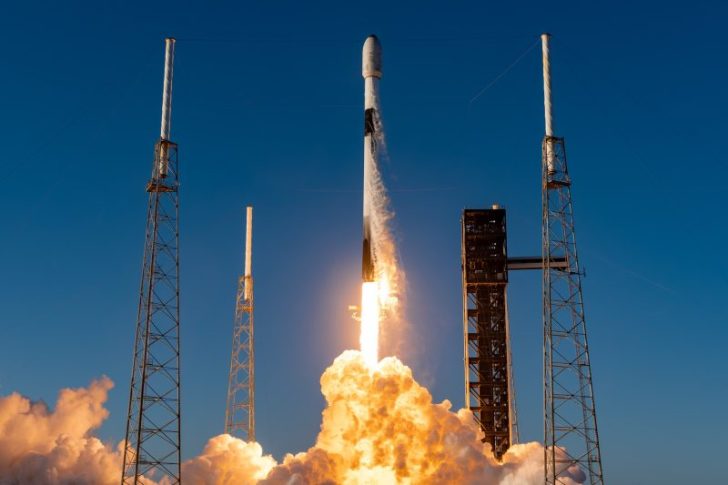
SpaceX / IG / The story started on January 15, 2025, when a SpaceX Falcon 9 launched from NASA’s Kennedy Space Center in Florida.
The mission carried Firefly Aerospace’s Blue Ghost 1 lunar lander and ispace’s RESILIENCE lander toward the Moon.
The launch itself worked as intended. After helping send the spacecraft on their journeys, however, the Falcon 9 upper stage remained in space instead of making a controlled return through Earth’s atmosphere. That leftover stage became an uncontrolled object traveling through the Earth-Moon system. Its future path depended on a complicated mix of gravity, solar radiation pressure, its rotation, and other forces acting on the empty rocket body.
Those small forces matter over long periods. Scientists tracking the stage eventually calculated that its wandering journey would end with a collision near the Moon’s Einstein Crater on August 5.
Researchers had enough warning to prepare for the event. A scientific paper published before the collision encouraged professional and amateur astronomers to observe the expected impact and its resulting plume. The stage hit at around 06:35 UTC. Researchers had predicted an impact speed close to 2.43 kilometers per second, while estimates for the size of the resulting crater varied depending on the model used.
The crash sounds dramatic, but impacts are nothing unusual for the Moon itself. Natural space rocks constantly strike its exposed surface because the Moon lacks the thick atmosphere that protects Earth from many smaller incoming objects. However, what makes this case unusual is the source of the impactor. Scientists knew the object was human-made, understood its history, and had tracked its path before it reached the lunar surface.
The Viral Crash Video Was Not the Real Thing
The impact quickly attracted attention online, and a dramatic video appeared to show the Falcon 9 stage hitting the Moon. There was one major problem with the viral footage because it did not actually show the August 5 collision. Fact-checkers traced versions of the footage to posts that appeared before the rocket stage hit the Moon. Elon Musk also shared purported footage before later acknowledging that the clip did not show the real event.
That distinction matters because no close-up camera was conveniently sitting beside the impact site. Scientists instead relied on telescope observations, tracking information, and orbital imagery to study the collision.
The lack of a spectacular live video does not make the crash itself questionable. Astronomers had calculated the stage’s trajectory before August 5, including the expected time, location, and approximate impact speed. Ground-based researchers also looked for signs associated with the collision. Observations detected material connected with the impact plume, giving scientists another way to investigate what happened without needing a cinematic video of the crash.
Accidental Crash Can Still Teach Scientists Plenty
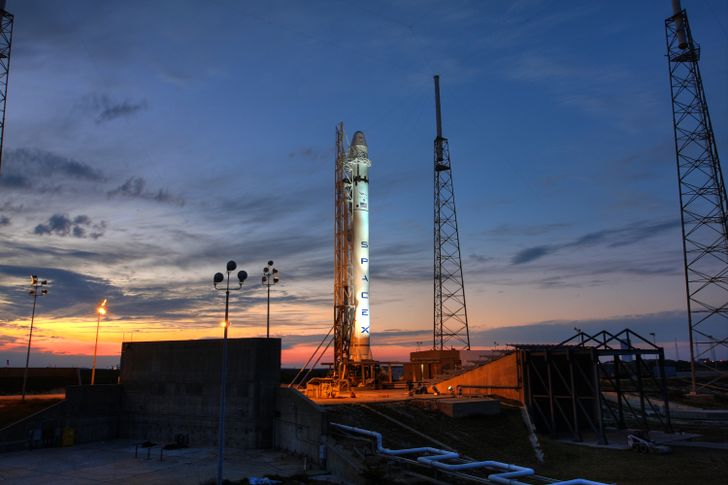
SpaceX / Pexels / Scientists did not deliberately send this Falcon 9 stage into the Moon as an experiment. Once the collision became unavoidable and predictable, researchers gained an unusual chance to collect useful information from it.
Because researchers knew important details about the incoming object, they could compare predictions with the actual results. That information can improve models describing crater formation, lunar dust movement, impact plumes, and the behavior of artificial debris near the Moon.
Researchers also want better ways to locate impact sites. Future lunar missions could use similar tracking techniques to understand where objects land and how debris might affect equipment operating on or near the lunar surface.